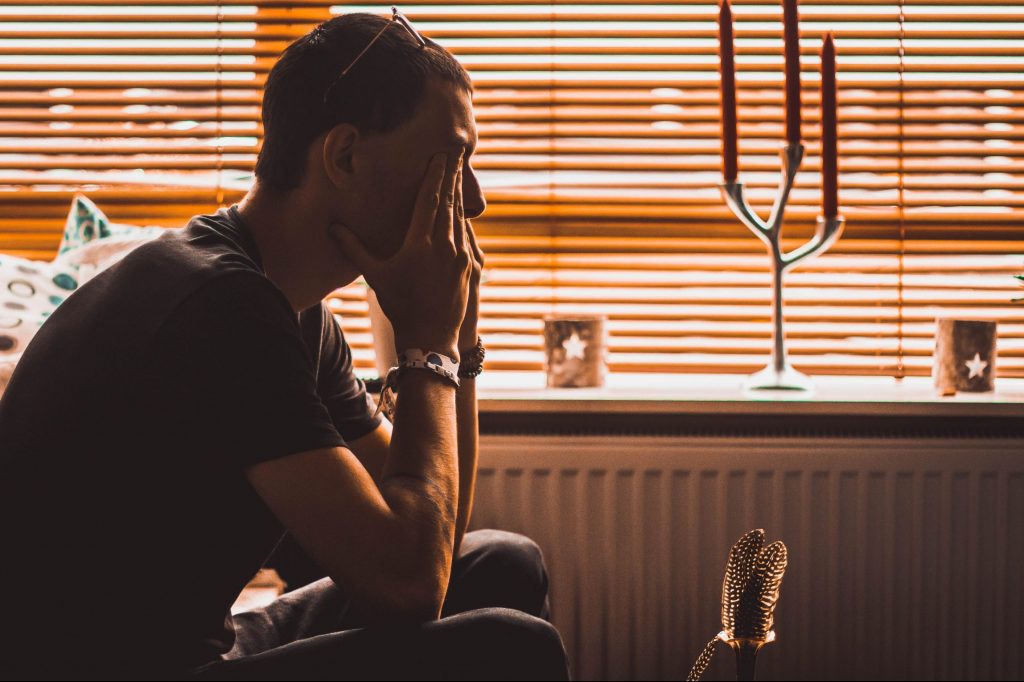
You’ve probably pulled an all-nighter before.
Maybe you were 14 when you did it the first time. Staying over at your best friend’s house, talking about those immature boys in your grade. Maybe you were 15, started studying too late for your biology exam, and realized circa 2 am that you had to choose between getting a good night of sleep and getting a good grade.
Maybe you were 18 and wanted to stay out on the rooftop to watch the sunrise with your partner, knowing this would be the moment when you kiss for the first time. (I’m kidding. That shit only happens in movies.)

People insist that there is nothing better than sex. Clearly, they have never felt what it’s like to FINALLY collapse onto your fluffy mattress after being awake for 36 hours.
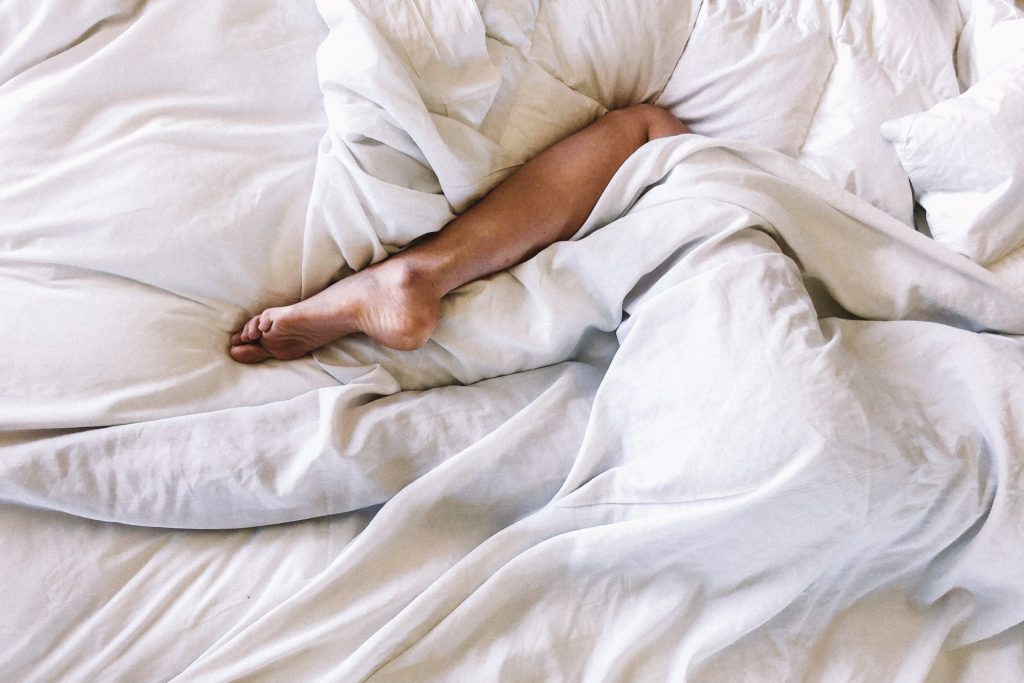
The sheets wrapped tightly around your body, swaddling you like a baby. Your legs feel so heavy, your eyes close slowly, and you’re so tired you can’t think anymore.

Lying down. Has never. Felt so good.
But why is sleep so important? What does it do besides make you less tired?
Why is sleep necessary for your health?
Getting a good night’s rest has so many benefits for you. If you want to become happier, healthier, more focused, more productive – just a better person all around – you should try to get enough sleep regularly.
If you sleep just a little bit better, you make better decisions and are more thoughtful and kinder to others. This kindness can have a ripple effect. Imagine if everyone were kinder to each other. Maybe we wouldn’t have so many damn problems.
If you think about it that way, sleeping enough is heroic. Saving the world one nap at a time. Kind of.
Even if you don’t change the world overnight (haha, get it, overnight**)**, you will still feel a lot happier and healthier if you sleep well.
But, when life gets stressful, rest is the first thing that gets tossed aside.
The triangle theory of college (I just made that term up), states that you can only have two out of these three things: a social life, good grades, and enough sleep.
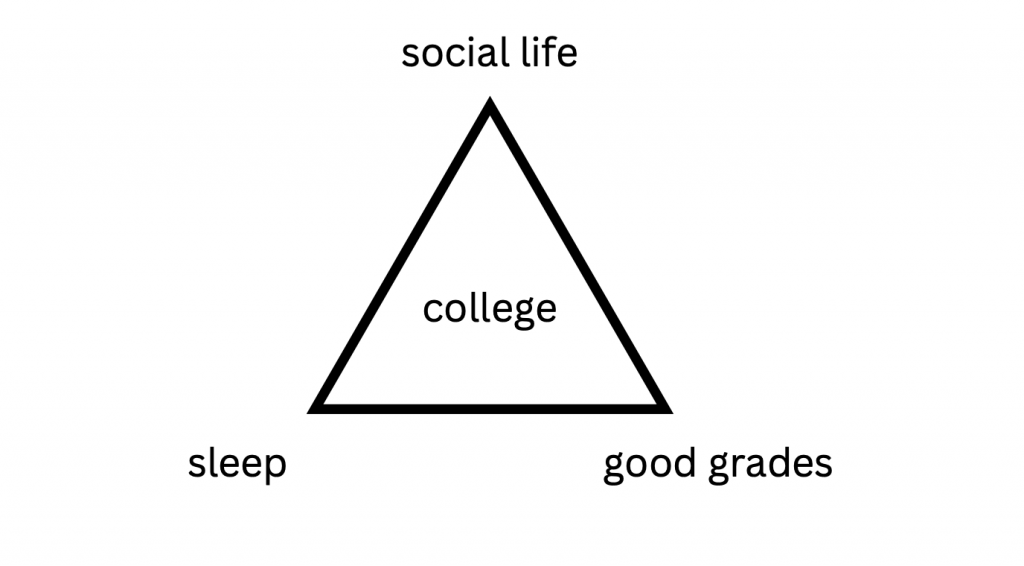
Of course, the grindset mindset, the no pain no gain doctrine, states that out of those three, sleep is the least important. It’s all in your head, bro. You just need to have willpower. Rest is for pussies.

Please don’t listen to the frat bros.
If you don’t get enough sleep you will perform worse on exams and essays (which will kill part one of your triangle: your good grades). Your mental health will become worse, you will become grumpier and just a little bit of a shittier version of yourself (which will kill part two of your triangle: your social life). So, if you think about it, you actually NEED sleep to achieve the other two goals.
Especially now that winter is coming (at least in my half of the world), slumber is a godsend. Days get longer. The weather becomes more depressing. You become more depressed.
So get in your 8 hours and tell that bitch seasonal depression to suck it.
What happens during sleep?
Neuroscience, a field that studies those cells that keep everything running smoothly in our brain and body, says there are three main reasons that you sleep.
The first is memory consolidation. While you’re floating in dreamland the connections between your neurons, called synapses, are strengthened. Rest turns your short-term memories into long-term memories. Memories that you don’t need anymore get eliminated: What you bought at the grocery store yesterday, that phone number you had to remember, how many times you went to the bathroom.
The second is what we all associate with sleep: rest, recovery, and relaxation. Your metabolism is lowered. Energy gets conserved. Your brain slows down.
And of course, you rest to stay healthy. During sleep, your body repairs and regenerates cells, restores your energy levels and eliminates toxic waste. Sleep boosts your immune system and keeps your heart healthy.
When you don’t get enough sleep, you find it harder to concentrate. You become more irritable with your friends and family. You are even more likely to be in a serious accident.
Long-term sleep deprivation can also lead to serious health problems like obesity, heart disease, diabetes, and depression.
And, most importantly, when you don’t sleep well, you just feel like shit.
What even is sleep?
Sleep is what you do when you lie down at night, tune everything out, and give your body and mind a nice little vacation. In its clinical definition, it is a periodical state of diminished reactivity to external stimuli.
While you sleep, you go through sleep cycles, during which you switch back and forth between two main types of sleep: REM (Rapid Eye Movement) sleep and non-REM sleep, aka slow wave sleep
Slow-wave sleep is what we usually associate with deep sleep. It is accompanied by a slowing of your heart rate and a reduction of body temperature. It is when your body is most at rest.
REM sleep is characterized by a state of total paralysis. Not only do you not want to move, you literally can’t.
This happens because the part of your brain called the brainstem inhibits your motor neurons, those cells in your brain responsible for movement.
REM sleep is also when you have your most vivid dreams and the ones you will remember after waking.
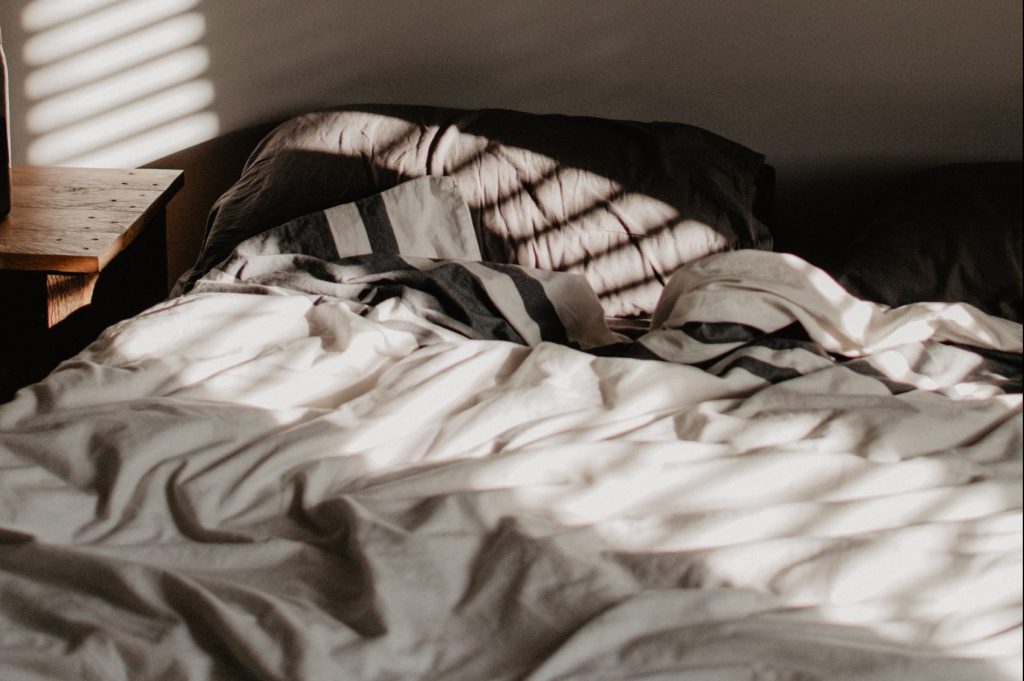
One sleep cycle lasts about 90 minutes. It is comprised of a period of slow-wave sleep followed by a period of REM sleep.
Depending on how long you stay in bed, you will go through four to six of these cycles.
Earlier in the night, more of your sleep cycle is spent on slow-wave sleep. With each additional 90-minute cycle, you spend a little less time on slow-wave sleep and a little more time in REMp
The longer you’re asleep, the more REM sleep you get.
Conversely, the less you’re asleep, the less REM sleep you get.
Let’s say you only sleep 6 hours instead of the recommended 8 hours (for young adults). Reducing your total sleep time by only two hours means you will lose 60-90% of all your REM. But why is this a problem?
What is the deal with REM sleep?
During REM sleep, your brain integrates your memories and creates meaning from all the experiences you had during the day. This information is then used to build a more accurate model of how you think the world works.
You know how sometimes you go to bed thinking of a problem, like, how am I ever to finish this essay on the importance of sleep or how can I nicely tell my friend that I think her partner sucks, and when you wake up in the morning you have the solution? (A: stop procrastinating and just write it. B: you don’t.)
This is very normal. REM sleep often leads to creative insights and ways to solve problems. It can also help you process and control your emotions better.
During REM sleep you not only make sense of the experiences you had during the day but also of past events from your life. These can sometimes be traumatic, or fear and anxiety-inducing.
While you sleep, your brain does not produce any adrenaline, which is usually released when you feel a lot of stress, anxiety, and fear.
This means that while you are sleeping you can process your fears and traumatic memories without experiencing the stress and anxiety that usually come with it. Over time, thinking of these things becomes less painful. Neat, right?
Because of this adjustment of your emotions, you often feel better about things after a good night’s sleep.
Fought with your parents? Sleep on it. Got a bad grade on your final exam? Sleep on it.
Your dog shit on the floor? Sleep on it and most definitely clean that shit up. Nasty.
Why do you feel tired?
It’s 9 pm. You’re sitting at dinner with your parents, but you can barely keep your eyes open. Your cheek is so red from resting it on your palm, it looks like somebody smacked you across the face.
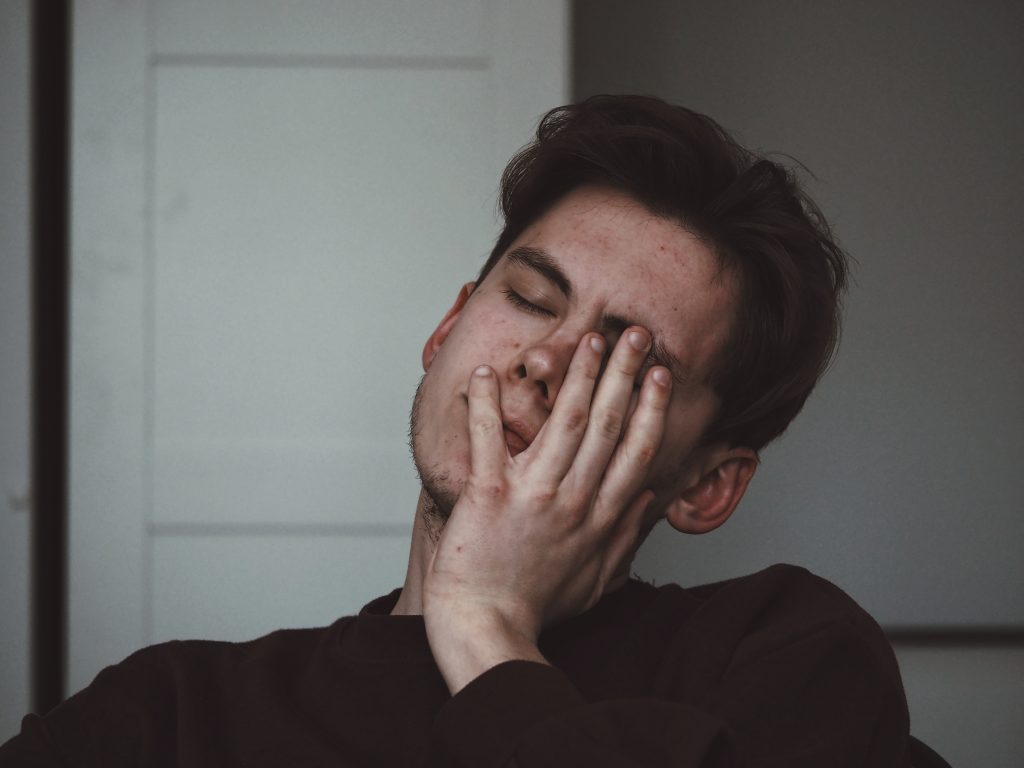
You start blinking slower and slower. And you think, why the hell am I so tired ALREADY?
The answer is your circadian rhythm.
Your circadian rhythm is a pattern of behavioral, biochemical, and physiological fluctuation that runs over 24 hours. Said less like a neuroscientist and more like a person: it dictates when you feel sleepy and when you feel awake. It is controlled by things like cortisol and melatonin.
Humans are diurnal. Our circadian rhythm dictates that we are active during the light periods of the daily cycle, aka during the day, and asleep during the dark periods, aka at night.
Your circadian rhythm stays fairly consistent over time. It always wants you to be awake during the day and asleep at night.
If you’ve ever pulled an all-nighter, you know this. Have you noticed how you feel the sleepiest at around 3 am to 5 am, but then slowly start feeling awake again in the morning? You’re up, going to school, living your life, and doing your chores.
You only crash in the late afternoon. Your sleep deprivation kicks in and your circadian rhythm says hey, it’s 5 pm, you should probably head to bed.
But your circadian rhythm is not the only thing that makes you want to hurl yourself onto your spring mattress.
The neurotransmitter adenosine, a sort of chemical messenger in your brain, makes you tired by increasing your sleep pressure. The heaviness in your eyelids. Slight nausea. The desperate urge to lie down horizontally wherever, whenever.
In short, the intense pressure you feel to just sleep.
Adenosine is released as soon as you wake up in the morning and it continues to be released all throughout the day. It reduces your brain activity and makes you tired.
The longer you’ve been awake, the more adenosine is in your body, and the more sleepy you feel. This is why, if you have been awake for 30+ hours, your body is DYING to lie down between your seven pillows.

It takes around 8 hours of sleep to get rid of the build-up of adenosine in your brain. This is why you wake up feeling refreshed after a good night’s sleep. Provided you didn’t pull an all-nighter the night before, that is.
How much sleep do you need?
While nobody knows for sure, most sleep research recommends that (young) adults get somewhere between 7 and 9 hours of sleep.
Where you fall on that spectrum is highly dependent on you.
To figure out how much sleep you need, you can perform your own little sleep diagnosis. For 1 to 2 weeks go to bed at the same time each night. In the morning write down at what time you naturally woke up.
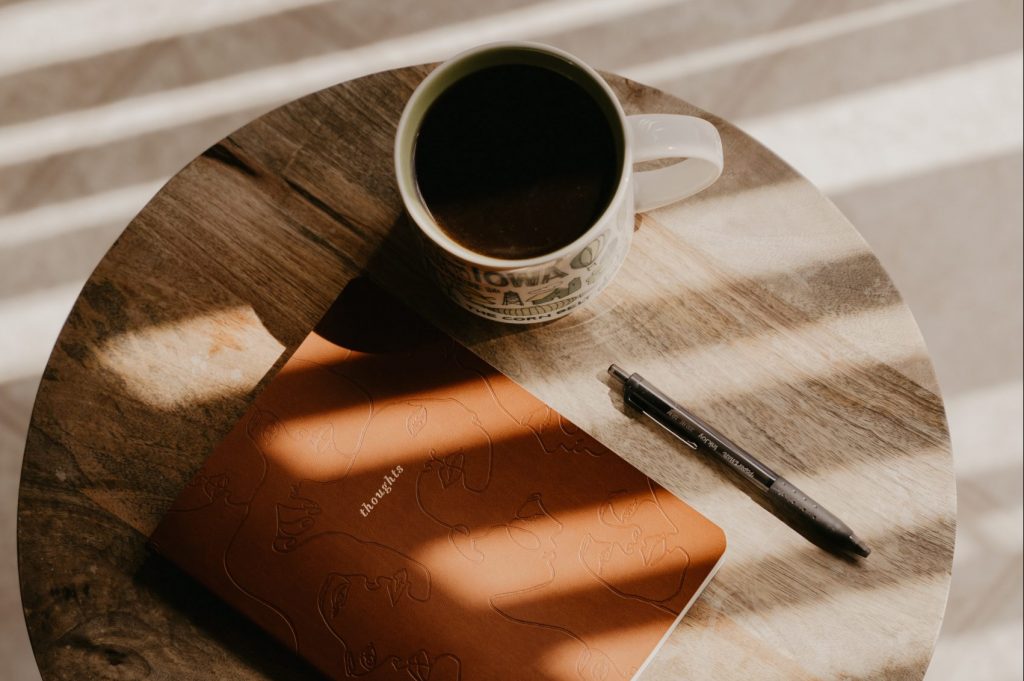
This means no alarm, so maybe do this during vacation. (You don’t want to run up to your lecture an hour late with the excuse of performing a sleep diagnosis on yourself.)
Take the average of your wake-up time over those 2 weeks and subtract it from your bedtime.
If you usually went to bed at 11:30 pm and woke up at 7 am, your average time in bed is 7.5 hours.
And there you go! Now you have calculated the average amount of time you spend in bed and can use this as a rough guide to how much you should be sleeping.
Remember that this is just a starting point. Some nights you might need another 30 minutes of being unconscious. That’s all good, bestie.
Can you sleep in on the weekends?
You can. But maybe you shouldn’t.
It’s better for your hormones, your mind, your happiness, and your overall health if you wake up at the same time every day. This, unfortunately, includes weekends.
Of course, you don’t need to wake up at 7:00 am down to the minute. Unless you’re super neurotic like me. (Let’s be friends, you sound fun.)
But try to be as consistent as possible. Avoid going to bed super late on Saturday and then sleeping until noon on Sunday. Unless noon is your regular wake-up time during the week. I won’t judge.
If you can stay somewhat consistent with when you go to bed and wake up, it will improve your mood and well-being over time. It will also ensure a regular hormone cycle. And hormones, as we all know, can be frickin’ annoying when they’re out of whack.
If you keep shifting around your sleep habits, waking up at 7 am on Friday and staying in bed until 11 am on Saturday, your body will be very confused, to say the least. Time zone wise it’s like you’re flying from the United States to Brazil every weekend. You little jet setter.
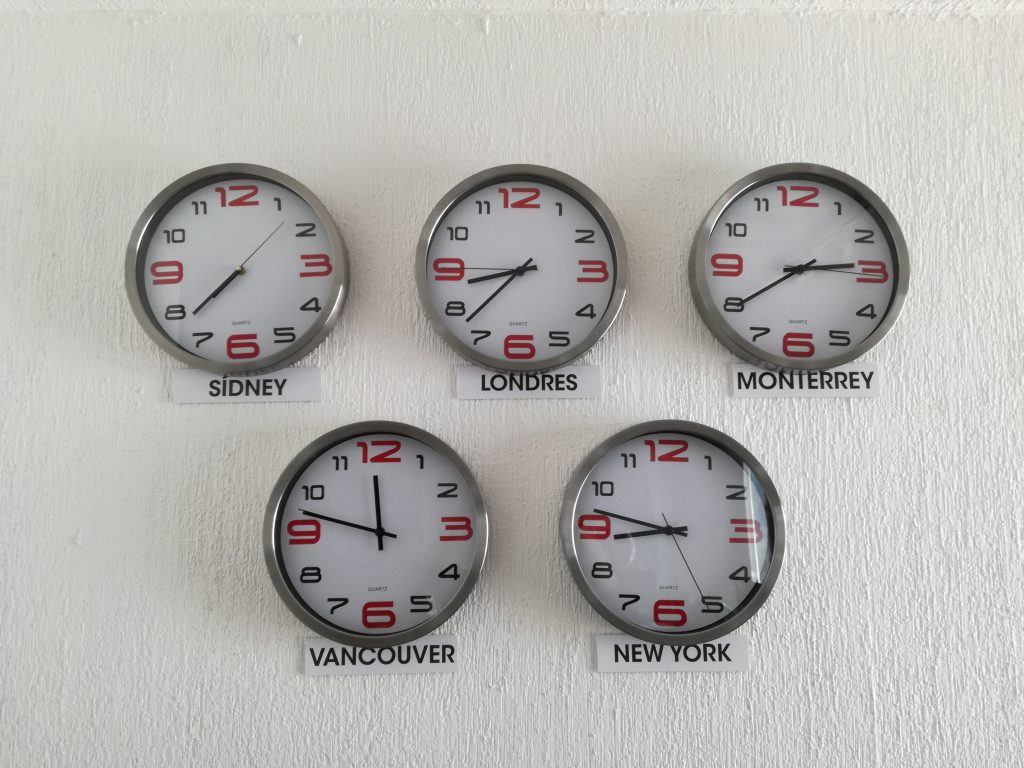
When you go out partying on Saturday and sleep in on Sunday, getting up on Monday S U C K S. Makes sense. Your body was just getting used to waking up later and now you’re violently waking her up with the trap remix of the iPhone ringtone.
Some studies show that getting regular sleep might even be more important than simply getting more sleep. For every hour in sleep variation, i.e., getting up at 9 am instead of 8 am, there is a small reduction in cognitive performance and focus the next day.
So even if you sleep less overall, it might be better to stick to a regular sleep-wake cycle. This means getting up fairly early, even if you went out partying the night before.

Of course, let’s not forget the role of habits.
Doing something consistently makes it so much easier over time. Waking up at 7 might feel like somebody is punching you in the boobs during the first week, but by week two that it will only be mildly unpleasant. Like somebody punching you in the arm.
But please take all this with a grain of salt and a scoop of common sense. Going to bed at 5 am and waking up at 7 does not seem like a great idea either.
Conclusion
Sleep is an underused tool for feeling and doing better in every aspect of your life.
It affects everything from your exam performance to your happiness to your mental and physical health and your relationships. Nobody likes hanging around with grumpy people. (Although they tend to be quite funny.)
Diagnosing your sleep need, and creating and STICKING TO a regular schedule can help you become healthier, happier, and hotter.
Hot girls snooze early.
Here’s my ultimate guide to falling asleep faster, improving your sleep quality, and waking up hotter the next day.